


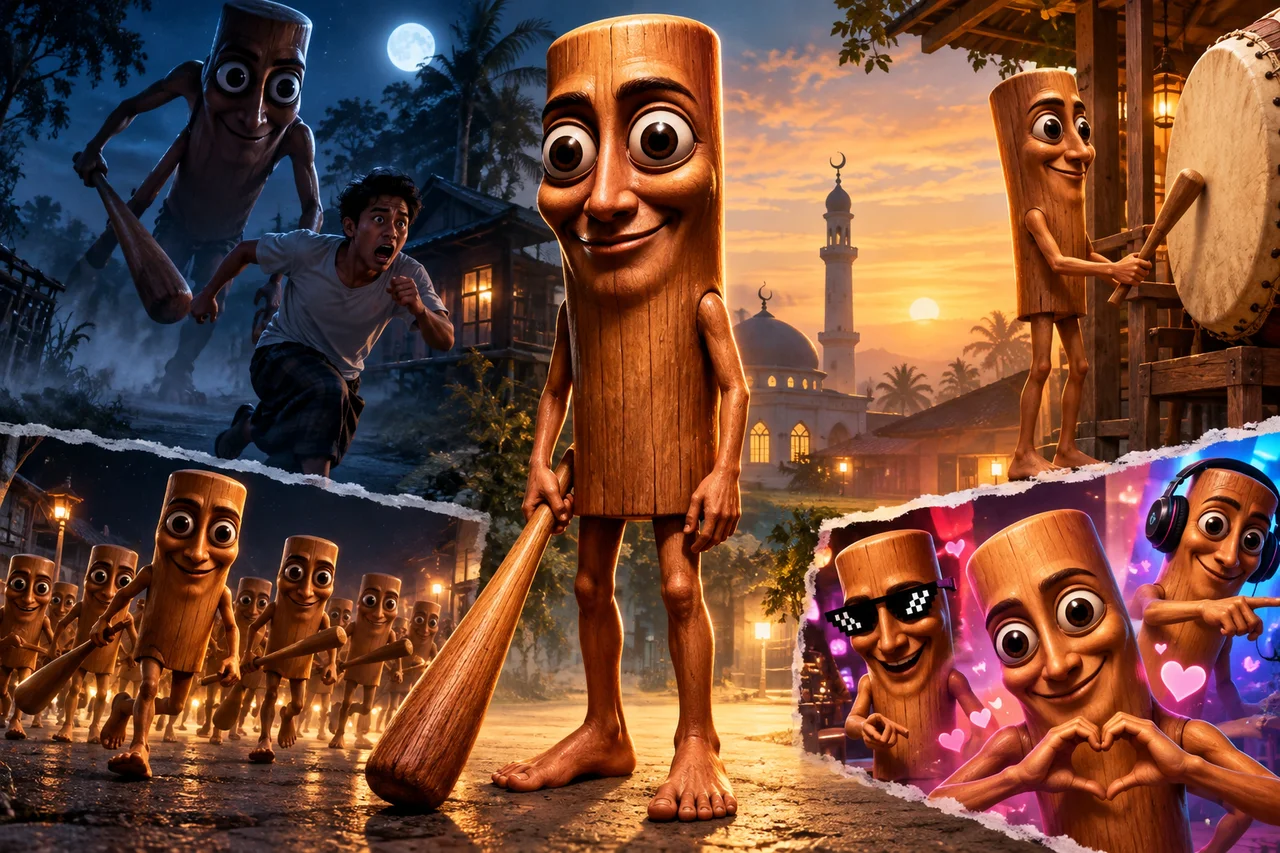
Tung Tung Tung Sahur is a viral AI-generated meme character that originated in Indonesia in 2025. The character is usually depicted as a strange wooden humanoid holding a bat or wooden stick. Its name comes from the rhythmic sounds associated with waking people for sahur, the pre-dawn meal Muslims eat before beginning their daily Ramadan fast.
Although Tung Tung Tung Sahur is frequently grouped with the bizarre AI characters known collectively as Italian Brainrot, its cultural origin is Indonesian. The original character appeared on TikTok in February 2025 and combined a genuine Ramadan wake-up tradition with deliberately absurd horror humor.
Tung Tung Tung Sahur at a Glance
| Detail | Explanation |
|---|---|
| Name | Tung Tung Tung Sahur |
| Origin | Indonesia |
| First known appearance | February 28, 2025 |
| Original platform | TikTok |
| Creator | Noxa / @noxaasht |
| Character | Anthropomorphic wooden figure carrying a bat or stick |
| Meaning of “Tung Tung Tung” | Imitation of rhythmic percussion or knocking |
| Meaning of “Sahur” | The pre-dawn Ramadan meal |
| Meme style | AI meme, surreal humor, mock horror, brainrot |
| Cultural inspiration | Indonesian traditions of waking communities for sahur |
The unusual name therefore has more cultural context than someone encountering the meme through TikTok edits or games might initially assume.
What Does Tung Tung Tung Sahur Mean?
The easiest way to understand Tung Tung Tung Sahur is to separate the name into two parts.
“Tung tung tung” represents a repeated percussive sound. It resembles the sound produced by wooden or bamboo percussion instruments used in Indonesian communities. “Sahur” refers to the meal Muslims eat before dawn during Ramadan, before the day’s fast begins.
The connection between percussion and sahur is not something invented for the meme. Indonesia has regional traditions involving music and percussion to wake communities for the pre-dawn meal. Indonesia’s official tourism website, for example, describes Madurese tong-tong music as originating from the practice of waking people for sahur during Ramadan. Other Indonesian traditions use bamboo percussion for a similar purpose.
The meme takes this recognizable cultural idea and turns it into something deliberately strange: instead of merely hearing the wake-up sound, viewers are introduced to a wooden creature associated with it.
Where Did Tung Tung Tung Sahur Come From?
The first known Tung Tung Tung Sahur character post appeared on February 28, 2025, when Indonesian TikTok creator Noxa (@noxaasht) posted the unusual wooden figure. Sources documenting the meme consistently trace its first appearance to this account and date.
The original concept used AI-generated imagery and mock-horror narration. The character appears as a humanlike wooden creature with prominent facial features, legs and a wooden bat or club.
Its timing also mattered. The post arrived immediately before Ramadan, so the sahur reference was culturally relevant rather than a random word attached to an AI character.
As users began remixing the character, the original joke expanded into animations, drawings, games, fan-created stories and crossover content featuring other viral AI characters.
The Original Tung Tung Tung Sahur Story
The original meme gives Tung Tung Tung Sahur a simple horror-style backstory.
According to the fictional narration associated with the character, Tung Tung Tung Sahur is a frightening “anomaly” that appears around sahur. The joke warns that a person who is called for sahur repeatedly but fails to respond may encounter the creature.
This is meme lore, not traditional Indonesian folklore.
That distinction matters because the character’s association with Ramadan traditions can make the story sound older than it actually is. The cultural practice of waking people for sahur is real, but the bat-carrying monster and its supernatural rules belong to the modern internet meme.
In other words:
Real tradition: communities use calls, music or percussion to wake people for sahur.
Internet fiction: ignoring the sahur call causes a creepy wooden character to appear.
Mixing those two ideas is a large part of the joke.
Is Tung Tung Tung Sahur an Indonesian or Italian Brainrot Character?
Tung Tung Tung Sahur is Indonesian in origin, even though internet users commonly place the character within the wider Italian Brainrot universe.
The confusion comes from timing and style. Italian Brainrot became a major short-form-video trend involving bizarre AI-generated characters with absurd names, surreal combinations and exaggerated narration. Tung Tung Tung Sahur circulated alongside those characters and was incorporated into the same fan-made universe.
However, its creator, language reference and Ramadan inspiration point to Indonesia. Sources covering the meme identify Noxa as an Indonesian creator and trace the name to Indonesian sahur traditions.
A useful distinction is:
| Aspect | Tung Tung Tung Sahur | Typical Italian Brainrot |
|---|---|---|
| Cultural origin | Indonesian | Associated with Italian-style internet absurdism |
| Main inspiration | Sahur wake-up tradition | Surreal AI character humor |
| Language connection | Indonesian cultural context | Often pseudo-Italian or Italian narration |
| Visual style | AI-generated surreal character | AI-generated surreal characters |
| Online communities | Often grouped with Brainrot | Core Brainrot category |
So describing Tung Tung Tung Sahur as a Brainrot character makes sense in terms of internet culture, but describing it as originally Italian obscures where the meme actually came from.
The Real Tradition Behind the Meme
The sahur element is what gives Tung Tung Tung Sahur a cultural foundation that many surreal internet characters do not have.
Across parts of Indonesia, communities have traditions involving percussion and groups moving through neighborhoods to wake residents before dawn during Ramadan. These customs vary considerably by region.
For example, Indonesia’s official tourism information describes tong-tong music in Madura as having developed from music once played to wake residents for sahur. It also documents rontek in Pacitan, a bamboo percussion tradition historically used during Ramadan to wake communities for the pre-dawn meal.
Some of these traditions have evolved beyond their original practical purpose. Tong-tong and sahur music can now appear in organized cultural festivals featuring elaborate musical arrangements, performances and decorated carts.
That context explains why “tung tung tung” works so effectively as part of the meme. The rhythmic sound immediately evokes knocking or percussion, while “sahur” tells Indonesian audiences why someone is making noise before dawn.
What Does Tung Tung Tung Sahur Look Like?
The best-known version of Tung Tung Tung Sahur resembles a tall wooden humanoid.
Its body has a cylindrical or log-like appearance, while its humanlike facial features make it intentionally uncanny. The character is commonly shown carrying a wooden bat, club or striking object and standing in a dark outdoor setting.
The design can also be interpreted as referencing wooden percussion imagery associated with the meme’s name. As the character spread online, however, fan artists and video creators produced many variations.
This means there is no need to treat every visual detail seen in later videos as part of the original character. Much of the elaborate “lore” surrounding Brainrot characters comes from fan-created remixes rather than their first appearances.
Why Did Tung Tung Tung Sahur Become So Popular?
Tung Tung Tung Sahur had several qualities that made it particularly suitable for short-form social media.
First, the name is rhythmic and memorable. Repeating “tung” produces an audio hook that works even when viewers do not understand the cultural reference.
Second, the visual is instantly recognizable. A wooden humanoid carrying a bat is strange enough to attract attention without requiring a complicated explanation.
Third, the meme mixes horror and comedy. The character looks threatening, but the premise is intentionally ridiculous. That contrast gives creators plenty of material for parodies and remixes.
Finally, it appeared during the broader explosion of AI-generated Brainrot characters in 2025. Once users began placing different characters together, individual memes could become parts of a much larger fictional universe rather than disappearing after a single viral post.
Is Tung Tung Tung Sahur a Real Legend?
No evidence indicates that the supernatural Tung Tung Tung Sahur character is an old Indonesian legend.
This is one of the most useful distinctions to make when researching the meme.
The tradition behind the sound is real. Waking communities for sahur with percussion has documented cultural precedents in Indonesia. The Indonesian Ministry of Tourism’s material on tong-tong and rontek traditions confirms that connection.
The monster story is internet fiction associated with the 2025 meme.
Someone unfamiliar with Indonesian Ramadan traditions might combine these two facts and assume that people have told stories about a wooden sahur monster for generations. Available evidence does not support that interpretation.
Tung Tung Tung Sahur and the Brainrot Universe
Once Tung Tung Tung Sahur escaped the context of its original video, the character became part of the larger online Brainrot phenomenon.
Brainrot content commonly combines AI-generated imagery, strange creatures, repetitive names, synthetic narration and intentionally nonsensical stories. Fans then expand the characters through animations, fictional battles, rankings, transformations, games and crossover stories.
Tung Tung Tung Sahur fit naturally into that format.
This secondary meme culture also explains why someone may encounter the character without seeing anything related to Ramadan. A game or fan animation can use Tung Tung Tung Sahur simply as a recognizable internet character.
That creates two layers of meaning:
Original context: an Indonesian sahur-themed AI horror joke.
Expanded internet context: a recurring Brainrot character used in games, animations, memes and fan-created stories.
Knowing the difference prevents later fan fiction from being mistaken for the character’s actual origin.
Common Misconceptions About Tung Tung Tung Sahur
One common misconception is that the character originated in Italy. It did not. Its documented origin is Indonesian, although it became closely associated with Italian Brainrot.
Another is that “Tung Tung Tung” is meaningless AI-generated language. In context, the repeated syllable functions as an imitation of percussion or knocking associated with waking people for sahur.
A third misconception is that the creature comes from traditional folklore. The sahur wake-up customs have genuine cultural roots, but the supernatural wooden character is a modern meme.
Finally, not every story, ability, relationship or battle attached to Tung Tung Tung Sahur online comes from its creator. Viral characters quickly acquire fan-made lore, making it useful to distinguish the original meme from later community creations.
FAQs About Tung Tung Tung Sahur
Who created Tung Tung Tung Sahur?
The original character is credited to Indonesian TikTok creator Noxa (@noxaasht), who posted the first known version on February 28, 2025.
What does Tung Tung Tung Sahur mean?
“Tung tung tung” imitates a repeated percussive or knocking sound, while “sahur” is the pre-dawn meal eaten before fasting during Ramadan. The phrase draws on traditions of waking communities for sahur with percussion.
Is Tung Tung Tung Sahur from Indonesia?
Yes. The meme originated with an Indonesian creator and draws directly from Indonesian Ramadan culture, despite frequently being grouped with Italian Brainrot characters.
Is Tung Tung Tung Sahur evil?
The original meme presents the character as a frightening fictional anomaly, but its increasingly detailed personality and powers mostly belong to internet meme culture and fan-created lore. It is not a real supernatural figure.
Is Tung Tung Tung Sahur based on a real legend?
The creature itself is not established as a traditional Indonesian legend. What is real is the underlying cultural practice of using calls, music or percussion to wake communities for sahur during Ramadan.
Why is Tung Tung Tung Sahur considered Brainrot?
Its AI-generated appearance, repetitive name, absurd premise and widespread use in surreal short-form videos resemble the characteristics of the broader Brainrot meme phenomenon. This led internet communities to group it with other Brainrot characters even though its cultural origin is Indonesian.
Conclusion
Tung Tung Tung Sahur started as an Indonesian AI meme but became much larger than its original TikTok appearance. Created by Noxa (@noxaasht) and first posted on February 28, 2025, the wooden character transforms a recognizable sahur wake-up concept into deliberately absurd mock-horror.
The most important distinction is between the real cultural tradition and fictional meme lore. Percussion and community wake-up traditions connected with sahur are genuine parts of Ramadan culture in regions of Indonesia, while the threatening wooden creature is a modern internet creation.
That combination of cultural familiarity, a memorable sound, AI-generated surrealism and endlessly remixable lore helped Tung Tung Tung Sahur move beyond its original Ramadan joke and become one of the recognizable characters of the wider Brainrot meme phenomenon.
For more helpful guides please visit RoyalSprinter.
