


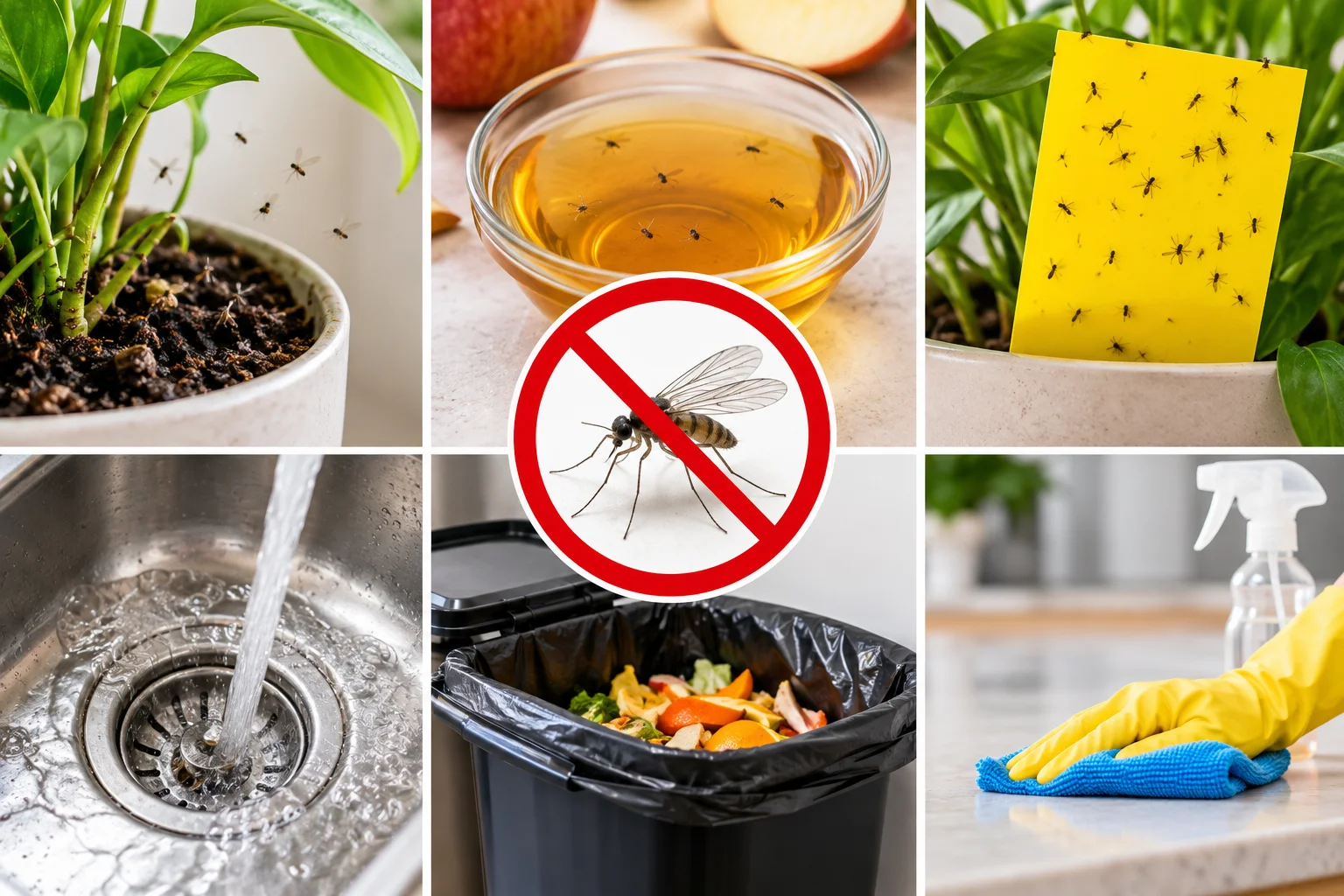
Gnats usually keep coming back because something in or around your home is giving them a place to breed. To get rid of gnats, remove that breeding source first, then trap or eliminate the adults that remain. Depending on the type of small fly you are seeing, the source may be damp houseplant soil, overripe produce, fermenting food residue, garbage, or buildup inside a drain.
The fastest approach is to identify where the insects gather. Gnats hovering around houseplants usually point to fungus gnats, while tiny flies around fruit and food are more likely fruit flies. Fuzzy, moth-like flies near sinks or showers are often drain flies. Each requires a slightly different treatment.
First, Figure Out What Kind of Gnat You Have
People often use “gnat” as a general name for several tiny flying insects. Before treating your home, look at where the flies spend most of their time.
| Where you see them | Likely pest | Common breeding source | Most useful first step |
|---|---|---|---|
| Around houseplants and potting soil | Fungus gnats | Moist organic potting mix | Reduce excess soil moisture |
| Around bananas, produce, recycling, or food | Fruit flies | Fermenting organic material | Remove and clean the food source |
| Around sinks, showers, or floor drains | Drain flies | Organic buildup inside plumbing | Scrub the affected drain |
| Throughout the house without an obvious source | Several possibilities | Hidden moisture, organic debris, plants, drains, or entry from outdoors | Inspect likely breeding areas systematically |
Fungus gnats are typically small, slender, dark flies. Their larvae develop in moist soil and feed largely on fungi and decaying organic material. University of Minnesota Extension notes that they are commonly associated with overwatered potting soil.
Fruit flies are commonly associated with ripe or fermenting fruits and vegetables, but the breeding source is not always the fruit bowl. They can also develop around trash containers, drains, garbage disposals, and other damp places containing fermenting material.
Drain flies are another problem entirely. If the insects are concentrated around plumbing, the breeding material may be the organic film coating the inside of a drain rather than something sitting on the counter.
Remove the Breeding Source Before Trying to Kill the Adults
Killing the gnats you can see may provide immediate relief, but it rarely solves an established infestation by itself. New adults can continue emerging while larvae remain in soil, drains, or decomposing organic material.
Start by inspecting the areas where you see the most activity. Check houseplant soil, fruit bowls, potatoes and onions in storage, trash and recycling containers, garbage disposals, drains, wet cleaning supplies, and spilled food or beverages.
Discard spoiled produce and other decaying material. Refrigerate ripe produce when practical, empty trash regularly, rinse food residue from recyclable containers, and clean spills thoroughly. Penn State Extension specifically recommends eating, refrigerating, or discarding ripe produce and keeping susceptible areas clean and dry when controlling fruit flies.
This source-first approach also follows the broader integrated pest management principle of identifying the pest and addressing conditions that support it before relying on pesticides.
Get Rid of Fungus Gnats in Houseplants
If tiny dark flies rise from a pot when you water or disturb a plant, fungus gnats are a strong possibility. Moist potting soil provides the conditions their larvae need.
Allow the surface of the potting mix to dry as much as the particular plant can safely tolerate between waterings. Do not leave pots standing in water, and make sure containers drain properly. University of Minnesota Extension recommends reducing excessive soil moisture because fungus gnats favor damp potting media.
Remove dead leaves, flowers, and other decomposing plant material from the soil surface as well. Yellow sticky cards positioned near affected plants can capture adult fungus gnats and help you monitor whether their numbers are decreasing. Sticky traps alone, however, do not eliminate larvae already developing in the soil.
For a persistent infestation, a soil treatment containing Bacillus thuringiensis subspecies israelensis (Bti) may be appropriate when the product is labeled for fungus-gnat control and used according to its directions. Bti targets the larval stage rather than the flying adults. Severe infestations can also justify repotting a plant using fresh potting medium and a clean container.
Be careful with plants that require consistently moist growing conditions. The goal is not to dehydrate the plant simply to kill gnats. Adjust watering within the moisture range appropriate for that species.
Get Rid of Fruit Flies in the Kitchen
For fruit flies, sanitation is more important than the trap you use.
Inspect ripe bananas and other fruit, vegetables, open beverages, food scraps, recycling, garbage cans, and forgotten produce in cabinets or pantries. Remove or refrigerate suitable food sources, then clean containers and surfaces where juice or other organic material has accumulated.
After removing the breeding source, a vinegar trap can reduce the remaining adults. Penn State Extension describes using cider vinegar in a jar with a paper funnel to capture fruit flies. Colorado State University Extension likewise notes that vinegar or red-wine baited traps can catch many adults.
The important distinction is that the trap is a cleanup tool, not the main cure. A bowl full of trapped flies does little good if more larvae continue developing in forgotten produce or fermenting residue nearby.
Get Rid of Drain Flies
If small flies repeatedly appear around the same sink, shower, or floor drain, investigate the plumbing.
Drain flies can reproduce in the moist organic film that accumulates inside plumbing. Simply pouring hot water down the drain may not remove this material. Colorado State University Extension recommends physically scrubbing affected plumbing and, when appropriate, using drain-cleaning products designed to break down the organic material that supports developing flies.
Clean accessible drain walls and components rather than focusing only on the drain opening. If the infestation continues despite thorough cleaning, look for less obvious moisture problems. Leaking or damaged plumbing can create damp breeding areas beneath floors or behind walls. Such problems need to be repaired and the affected area dried.
Persistent flies from a drain can therefore be more than a cleaning issue. When you cannot access or locate the breeding area, a plumber or pest-management professional may be needed to investigate the source.
Use Traps to Reduce Adult Gnats
Traps are useful when paired with source removal.
For fruit flies, vinegar-based traps can reduce flying adults. For fungus gnats, yellow sticky cards placed near houseplants can capture adults and provide a simple way to monitor the infestation.
Vacuuming visible adults can also provide immediate reduction without introducing pesticides indoors. Empty the vacuum afterward if needed.
Avoid judging success by adult flies alone. A noticeable decline followed by another small wave can occur if immature insects were already developing when you cleaned the source. Continue monitoring the affected area rather than abandoning the treatment after a day or two.
What to Do If Gnats Keep Coming Back
Recurring gnats usually mean that a breeding source remains.
Use the location of the adults as a clue. If they consistently gather around one plant, investigate its soil and drainage. If they concentrate around a sink, investigate the drain. If they repeatedly appear in the kitchen, inspect stored produce, garbage, recycling, and hidden food residue.
When the source is not obvious, work through the home systematically rather than treating every room with insect spray. This makes it easier to identify what is actually supporting the infestation.
A simple diagnostic sequence is:
- Identify the room with the highest number of flies.
- Determine whether they concentrate around plants, food, trash, or plumbing.
- Remove or clean the suspected breeding material.
- Add an appropriate trap to monitor adults.
- Continue checking the area for new activity.
- If activity persists, investigate hidden moisture or another nearby breeding source.
This method separates short-term adult control from the more important task of stopping reproduction.
Common Gnat-Control Mistakes
One of the biggest mistakes is treating every tiny flying insect as the same pest. A vinegar trap may work well for adult fruit flies but does not correct fungus-gnat larvae developing in potting soil. Likewise, reducing houseplant watering will not solve flies breeding in a dirty drain.
Another mistake is relying entirely on insecticide. EPA’s integrated pest management guidance emphasizes pest identification, prevention, monitoring, and lower-risk controls rather than treating pesticide application as the only solution.
Finally, do not overlook moisture. Constantly wet plant soil, plumbing leaks, and damp organic material can all support different small flies. Removing the conditions that allow reproduction usually provides more durable control than repeatedly killing adults.
How to Prevent Gnats From Returning
Once the infestation is controlled, make the original breeding site less attractive.
Avoid routinely overwatering houseplants and make sure pots drain properly. Remove dead plant material and inspect new plants before placing them beside an existing collection. University of Minnesota Extension recommends monitoring plants regularly and notes that quarantining new plants can help keep pests from spreading.
In the kitchen, avoid leaving overripe produce exposed for long periods. Keep trash and recycling clean and managed, wipe up sugary spills, and investigate drains if small flies begin gathering around them.
These habits work because they interrupt the conditions the insects need to reproduce rather than merely reacting once adults become noticeable.
When to Consider Professional Help
A small fruit-fly or fungus-gnat problem can usually be handled at home by locating and eliminating its source. Professional investigation becomes more useful when large numbers continue appearing despite thorough sanitation and treatment.
Pay particular attention when flies seem to emerge from walls, floors, inaccessible plumbing, or areas with unexplained moisture. Hidden plumbing leaks or other inaccessible organic material can support fly development and may require repair or specialized pest management.
Frequently Asked Questions
What is the fastest way to get rid of gnats?
Find where they are breeding and remove that source. At the same time, use a trap suited to the pest to reduce adults. For example, yellow sticky cards can capture adult fungus gnats around plants, while vinegar traps can catch fruit flies.
Why do I suddenly have gnats in my house?
A new breeding opportunity may have developed. Common examples include overly wet potting soil, ripe or fermenting produce, food residue, garbage, or organic buildup in plumbing. Identifying where the insects cluster usually provides the best clue.
Will vinegar get rid of gnats?
Vinegar can be an effective bait for adult fruit flies, but it is not a universal gnat treatment. It will not solve an infestation if larvae continue developing elsewhere.
How do I get rid of gnats without killing my houseplants?
Reduce watering only to the level the plant can safely tolerate, improve drainage, remove decaying plant debris, and use yellow sticky cards for adults. For persistent fungus gnats, an appropriately labeled Bti soil treatment can target larvae.
Why are there gnats in my bathroom?
Small flies around bathrooms may actually be drain flies rather than fungus gnats or fruit flies. Organic buildup inside a drain, or moisture associated with leaking plumbing, can provide a breeding site. Cleaning the breeding material is more effective than simply killing visible adults.
Why do gnats keep returning after I kill them?
Adults are only one stage of the infestation. Eggs or larvae may still be developing in damp soil, fermenting material, or plumbing buildup. If the breeding source remains, another generation can appear after the adults you initially saw are gone.
Conclusion
The most reliable way to get rid of gnats is to treat the source, not just the insects flying around the room. Start by determining whether the problem comes from houseplants, food and produce, or plumbing. Then remove the breeding material and use sticky cards, vinegar traps, or another targeted control to catch the remaining adults.
For fungus gnats, focus on moisture management and the potting soil. For fruit flies, remove fermenting food sources and improve kitchen sanitation. For drain flies, physically clean organic buildup from the plumbing and investigate persistent moisture. Once reproduction stops, eliminating the remaining adults becomes much easier.
For more helpful guides please visit RoyalSprinter.
