


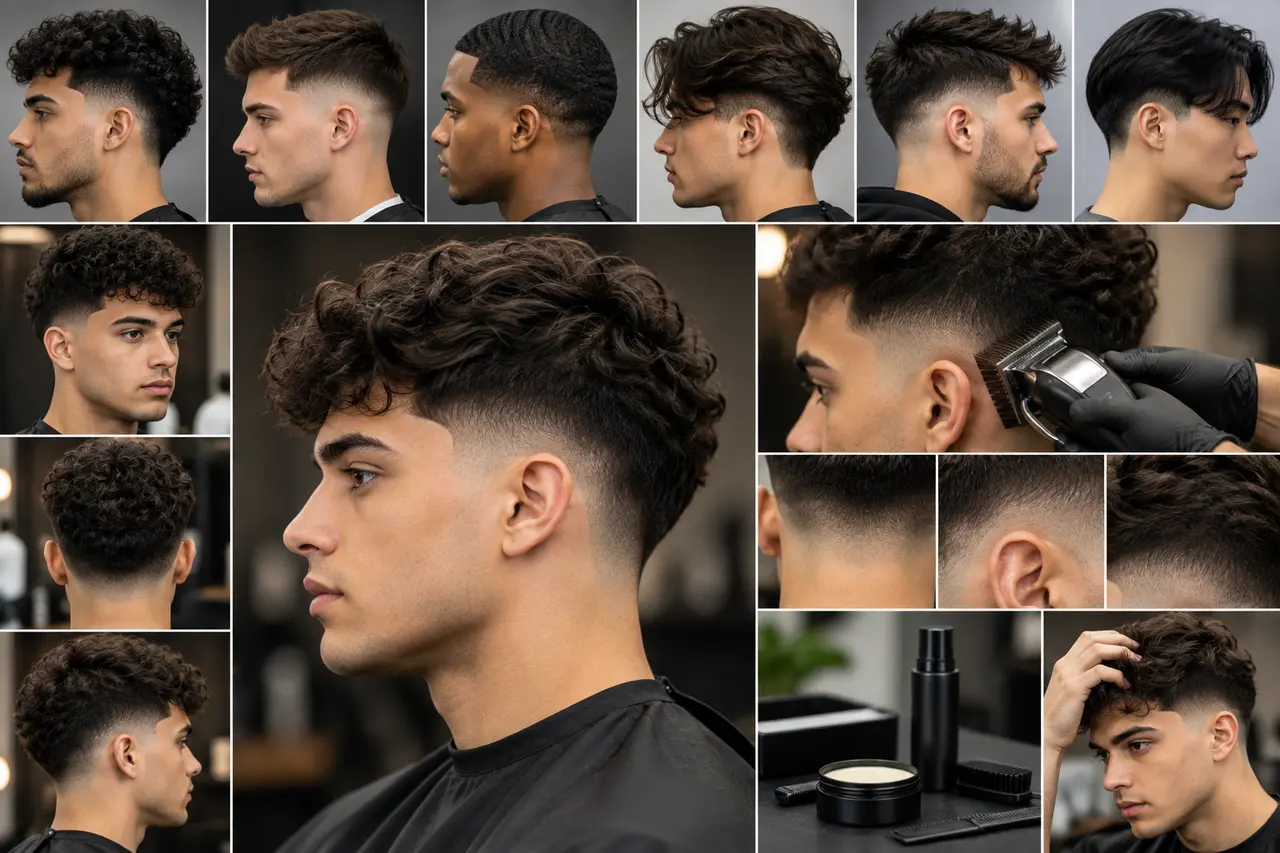
A low taper fade gradually shortens the hair around the sideburns and neckline while keeping most of the hair on the sides and top relatively full. Because the transition stays close to the natural hairline, the result is cleaner and more subtle than a full low, mid, or high fade.
The haircut can be paired with straight, wavy, curly, or coily hair and works with everything from short crops and buzz cuts to longer textured styles. The key to getting the right result is understanding where the taper should sit, how short it should go, and how much length you want to preserve above it.
What Is a Low Taper Fade?
A low taper fade is a haircut in which the barber gradually reduces the hair length around the lower edges of the head, particularly the sideburns and nape. Instead of carrying the shortest section high up the sides, the transition remains concentrated close to the hairline.
This placement is what gives the haircut its understated appearance. Much of the hair above the ears remains intact, so you can clean up the outline without dramatically changing the overall shape of your hairstyle.
The word low describes where the transition occurs. Taper refers to the gradual reduction in length, while fade describes the smooth blending of progressively shorter hair.
The shortest point does not necessarily have to be bare skin. A barber can finish the taper at skin, zero, 0.5, or a longer guarded length depending on how much contrast and scalp exposure you want.
What Does a Low Taper Fade Look Like?
From the side, the most noticeable change usually occurs around the sideburn. The hair becomes progressively shorter as it approaches the bottom of the sideburn while the area above remains comparatively full.
From behind, the same principle applies around the neckline. The hair gradually transitions into a shorter finish near the nape rather than maintaining one uniform length all the way down.
A well-executed low taper should therefore look like a controlled transition rather than a distinct horizontal stripe around the head. The overall haircut keeps its original shape while the perimeter looks sharper.
This distinction matters when showing your barber reference photos. Two haircuts can both be described online as a “low taper fade” while one exposes skin and another stops at a guarded length. Tell your barber how short you want the bottom rather than relying on the haircut’s name alone.
Low Taper Fade vs. Low Fade
A low taper fade and a low fade are often confused, but they can produce noticeably different silhouettes.
A low taper generally concentrates the shortest blending around the sideburns and neckline. A conventional low fade usually creates a more continuous band of progressively shorter hair around the lower sides and back of the head.
| Feature | Low Taper Fade | Low Fade |
|---|---|---|
| Main blending area | Sideburns and neckline | Lower sides and back |
| Amount of side hair removed | Less | More |
| Overall contrast | Subtle | More noticeable |
| Side profile | Retains more fullness | Looks tighter |
| Scalp exposure | Depends on requested base | Often more visible |
| Grow-out | Generally softer | Regrowth may become noticeable sooner |
| Useful when you want | Clean edges without losing side length | A more obvious faded appearance |
The difference becomes especially important if you have curls, thick hair, longer sides, or a hairstyle whose shape depends on maintaining weight above the ears.
If you want to preserve that shape, tell your barber explicitly that you want the taper kept compact around the sideburns and neckline rather than carried around the entire side of the head.
Low vs. Mid vs. High Taper Fade
The primary difference between low, mid, and high taper styles is the position and extent of the transition.
A low taper keeps the transition closest to the lower hairline. Moving the transition upward makes the taper more visible and removes more weight from the sides.
| Style | Transition placement | Visual effect | Side fullness |
|---|---|---|---|
| Low taper fade | Near the sideburns and neckline | Subtle | Highest |
| Mid taper fade | Higher around the temple/side area | More noticeable | Moderate |
| High taper fade | Higher toward the upper sides | Stronger contrast | Lower |
A useful way to choose is to decide how much of your existing side profile you want to preserve. If you like your current hairstyle but want cleaner edges, start lower. If you want the tapered area to become a prominent part of the haircut, a higher transition creates more contrast.
Popular Low Taper Fade Styles
The taper itself only determines what happens around the edges. The hair left on top can completely change the finished appearance.
Low Taper Fade With Textured Hair
A textured top contrasts naturally with the cleaner perimeter. Instead of flattening the top, styling products can emphasize separation and movement while the taper prevents the sides and neckline from looking overgrown.
This combination works particularly well when you want an intentionally relaxed top without making the entire haircut look unstructured.
Low Taper Fade With Curly Hair
Curly hair benefits from preserving enough length for the curl pattern to remain visible. A low taper can clean the temples, sideburns, and neckline without requiring the barber to remove substantial volume from the rest of the sides.
Ask the barber to preserve the curl shape above the taper. Cutting the transition too high can change the silhouette more than expected.
Low Taper Fade With Coily Hair
Coily hair can create strong visual contrast between a dense top and a precisely tapered perimeter. The top can remain natural, shaped, twisted, or otherwise styled while the lower edges receive the shorter blend.
The exact height deserves particular attention. A compact taper preserves more density around the head, while extending it upward creates a more dramatic shape.
Low Taper Fade With Straight Hair
Straight hair makes changes in length relatively easy to see, so a smooth blend matters. The haircut can be paired with a fringe, side part, textured crop, longer swept top, or shorter classic style.
If the sides tend to stick outward as they grow, discuss how much weight should remain above the taper. Simply cutting everything shorter is not always necessary.
Low Taper Fade With Wavy Hair
Natural waves provide texture on top while the tapered perimeter gives the haircut a more defined outline. Leaving some length on the sides can also preserve the natural flow of the waves instead of interrupting them with a large faded section.
Low Taper Fade With a Fringe
A fringe shifts attention toward the front of the haircut, while the low taper cleans the sideburns without competing with it.
The combination can range from a short textured fringe to a longer, looser front. When showing your barber a reference photo, discuss the fringe and taper separately because they involve different parts of the haircut.
Low Taper Fade With a Middle Part
A middle part or curtain-style top generally needs enough length and weight to fall naturally. Keeping the taper low allows the longer hair to remain the dominant feature while preventing the perimeter from appearing untidy.
Low Taper Fade With a Buzz Cut
A buzz cut and low taper create a different effect because there is less length contrast between the top and sides. The taper primarily adds definition around the temples, sideburns, and neckline.
You should still specify the buzz-cut guard and taper length separately. For example, the top can remain at one guarded length while the edges transition shorter.
Low Taper Fade With a Beard
A taper can also create a cleaner visual transition between the haircut and facial hair.
Tell the barber whether you want the sideburn to disappear into the fade, transition gradually into the beard, or remain more defined. That small decision can noticeably change the side profile.
Skin, Zero, or Guarded Low Taper: Which Finish Should You Choose?
“Taper” does not automatically mean skin.
The shortest length determines how much contrast the haircut creates and how quickly visible regrowth appears. One barbering guide distinguishes skin, zero, 0.5, and 1 finishes, with guarded options producing a softer edge and less scalp exposure.
Skin taper: The lowest section is taken extremely close to the skin. This creates the strongest contrast but also makes new growth more apparent.
Zero taper: The barber uses the clipper without a conventional guard, leaving a very short finish rather than deliberately creating a bare-looking section.
0.5 or 1 taper: Some visible hair remains at the lowest point. The transition appears softer and can be useful when you do not want much scalp exposure.
If you have never had a taper before, starting slightly longer gives you more room to adjust. A barber can remove additional hair during the appointment, but cannot restore length after taking the taper higher or shorter than intended.
How to Ask Your Barber for a Low Taper Fade
The clearest barber request describes placement, shortest length, side fullness, neckline, and the hairstyle on top.
Instead of saying only:
“Give me a low taper fade.”
You could say:
“Keep the taper low and compact around my sideburns and neckline. Take the bottom to a 0.5, but keep the sides above the ears full. I don’t want the fade carried high around the head.”
Then explain what you want on top.
For example, specify whether you want to keep the current length, remove a particular amount, preserve curls, add texture, shorten the fringe, or change the overall shape.
A reference photo is also useful. Ideally, choose someone with hair texture and density reasonably similar to yours and show more than one angle if possible.
Use This Barber Checklist
Before the clippers start, establish these five details:
- Height: How low should the taper remain?
- Base: Skin, zero, 0.5, 1, or another preferred length?
- Sides: Should the barber preserve fullness above the ears?
- Neckline: Natural, tapered, or another preferred finish?
- Top: How much length should be removed, and how should it be styled?
This short conversation prevents one of the most common misunderstandings: asking for a subtle taper and receiving a fade that removes substantially more side length than expected.
How to Choose a Low Taper for Your Hair
Hair texture matters more than simply copying a photograph.
With fine or lower-density hair, preserving additional side length can help avoid unnecessary scalp exposure. A guarded taper may also create a softer transition than taking the bottom completely to skin.
With thick hair, removing bulk and creating a taper are separate decisions. You may need some weight removed above the ears even while keeping the actual taper low.
With curly or coily hair, think about the shape you want when your hair is dry and naturally sitting in place. The taper should complement that silhouette rather than dictate it.
With straight or wavy hair, consider how the sides behave after two or three weeks of growth. Your barber may adjust the surrounding length to prevent the area above the taper from becoming bulky.
Hairline characteristics matter as well. Cowlicks, growth direction, density changes, scars, and naturally uneven areas can affect how a reference haircut translates to your head. A skilled barber can adjust the blend rather than forcing identical measurements on everyone.
How to Style a Low Taper Fade
The faded portion requires almost no daily styling. Most of your routine depends on the hairstyle above it.
For a textured top, apply a small amount of suitable styling product and work it through the hair rather than concentrating it at the roots. Matte products generally emphasize separation without adding much shine, while creams can provide a softer finish.
Curly and coily styles usually benefit more from preserving their natural pattern than from repeatedly combing the hair into a rigid shape. Choose products according to your hair’s moisture and hold requirements.
Longer tops may require a blow-dryer for direction and volume. Use moderate heat rather than repeatedly applying excessive heat close to the hair and scalp.
The important point is that you do not need to “style the fade.” Keep the tapered area clean and focus your styling effort on the longer hair.
How Often Does a Low Taper Fade Need a Haircut?
There is no universal schedule because hair growth rate, base length, density, and personal preference affect how quickly the haircut loses its freshly cut appearance.
As a practical range, current barbering guides commonly place low-taper refreshes at roughly two to five weeks, with skin-close versions generally requiring attention sooner and guarded tapers remaining visually softer as they grow.
If you want the sideburns and neckline to look extremely sharp at all times, you may prefer more frequent touch-ups. If you are comfortable with a softer grown-in appearance, you can extend the interval.
A useful distinction is between losing freshness and needing a complete haircut. Your edges may stop looking freshly cut before the top and overall shape actually need to be shortened.
How to Maintain a Low Taper Between Barber Visits
Start with basic maintenance rather than attempting to recreate the fade yourself.
Wash your hair according to the needs of your hair and scalp, keep styling-product buildup under control, and maintain the hairstyle on top as it grows.
If stray hairs appear below the natural neckline, they can make the haircut look older than it is. However, aggressively moving the neckline upward or trying to rebuild the gradient yourself can change the shape of the taper.
The same applies around the sideburns. Cleaning obvious stray growth is different from attempting to blend multiple clipper lengths.
If you regularly want the haircut restored to a very sharp finish, a quick professional edge or taper cleanup between full haircuts may be more predictable than trying to reproduce the barber’s blend at home.
Common Low Taper Fade Mistakes
One of the biggest mistakes is treating the haircut’s name as a complete set of instructions. Different barbers and clients may use taper and fade terminology somewhat differently. Explain the result you want rather than depending on the label alone.
Another mistake is allowing the taper to creep too high. Once too much hair has been removed from the sides, the cut may resemble a conventional low fade rather than a compact taper.
Going to skin without considering the finished appearance can also create more contrast than expected. A skin taper is only one version of the haircut, not a requirement.
Finally, avoid choosing a reference photo solely because you like the haircut on another person. Hair density, texture, growth direction, head shape, and the amount of length on top all affect the finished result.
Is a Low Taper Fade Worth Choosing?
A low taper fade makes sense when you want cleaner sideburns and a neater neckline while retaining most of the hair that gives your hairstyle its overall shape.
Its biggest advantage is flexibility. The taper can sit beneath curls, waves, a crop, fringe, middle part, buzz cut, or longer hairstyle without forcing the entire haircut into one specific look. Current barbering references consistently describe the style as compatible with straight, wavy, curly, and coily textures.
It may be less suitable if your goal is substantial scalp exposure or a dramatic contrast across the entire side of the head. In that case, a conventional low, mid, or high fade may better match the visual result you have in mind.
Frequently Asked Questions About Low Taper Fades
Does a low taper fade have to go down to the skin?
No. The shortest section can finish at skin, zero, 0.5, 1, or another guarded length. The appropriate choice depends on the amount of contrast and scalp exposure you want.
Does a low taper fade work with curly hair?
Yes. A low taper can clean the sideburns and neckline while preserving the curls and overall shape above them. Keeping the taper compact is particularly useful when you do not want to remove significant volume from the sides.
Can you get a low taper fade with long hair?
Yes. The longer hair can remain on top while only the lower perimeter is tapered. Explain how much side length you want preserved so the barber does not extend the fade farther upward than intended.
What’s the difference between a low taper and a low fade?
A low taper typically concentrates the shortest blending around areas such as the sideburns and nape, preserving more of the sides. A low fade generally creates a more continuous transition around the lower sides and back. Terminology can vary between barbers, so a reference photo and clear instructions are useful.
How long does a low taper fade last?
There is no fixed lifespan. Skin-close tapers lose their crisp contrast relatively quickly as new hair becomes visible, while guarded versions tend to grow out more softly. Depending on hair growth and how sharp you like the haircut, a refresh may fall roughly within a two-to-five-week range.
What should I tell my barber if I don’t want too much hair removed?
Ask for a low, compact taper around the sideburns and neckline, specify the shortest guard you want, and explicitly say that you want to preserve the fullness above the ears. Showing a reference photograph can make the intended height and shape even clearer.
Conclusion
A low taper fade offers a simple way to sharpen the sideburns and neckline without sacrificing most of the length and fullness on the sides. Its relatively small tapered area also leaves considerable freedom to choose the hairstyle above it, from curls and waves to fringes, crops, buzz cuts, and longer styles.
For the most predictable result, do not walk into the barbershop with the haircut name alone. Decide how low you want the transition, whether the bottom should be skin or a guarded length, how much side fullness you want to preserve, and what should happen on top. Those details give your barber a much clearer picture of the haircut you actually want.
For more helpful guides please visit RoyalSprinter.
