


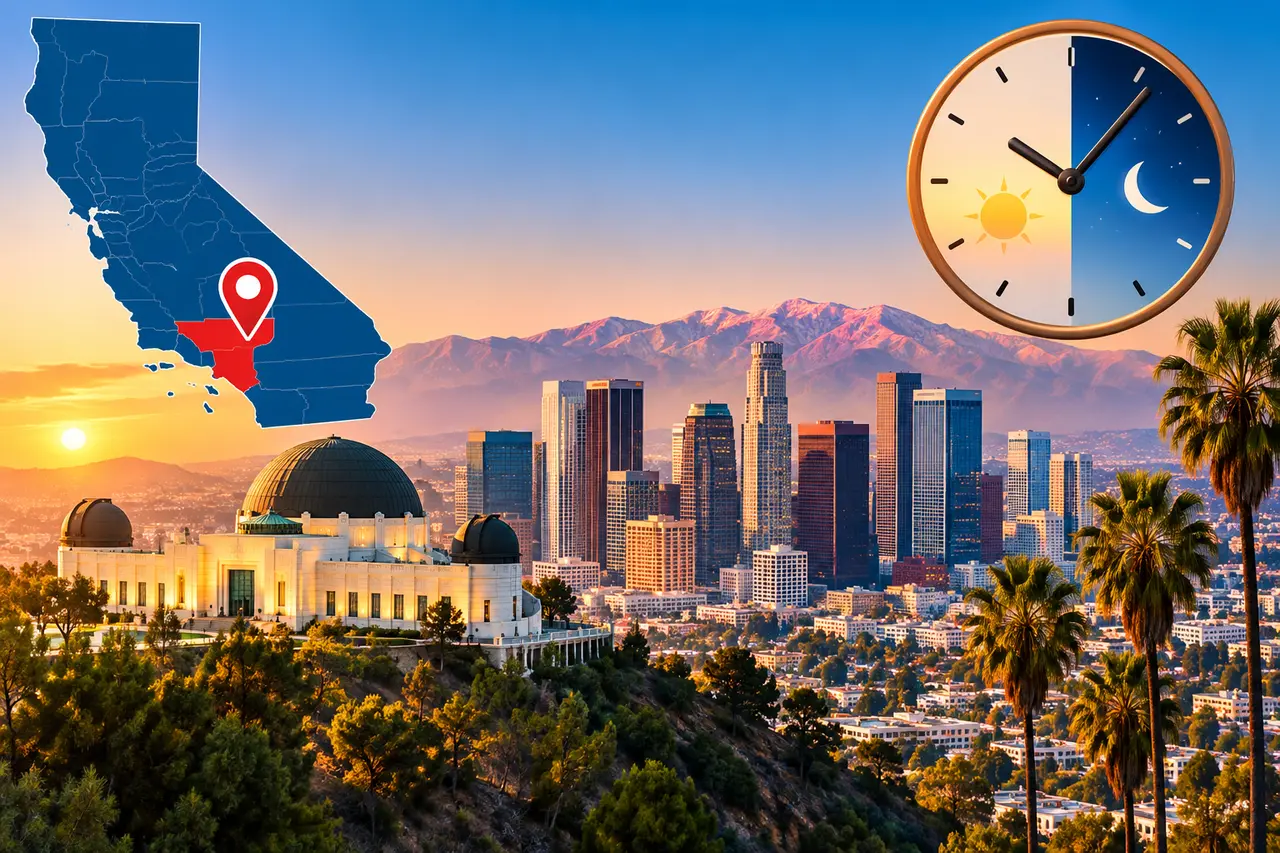
The 213 area code is associated with Los Angeles, California, particularly downtown Los Angeles and communities within the broader central Los Angeles area. Today, 213 shares its geographic region with the 323 and 738 area codes, meaning people and businesses in the same general area can have any of these three codes.
If you received a call from a 213 number, the number is associated with the Los Angeles area. However, that does not necessarily mean the person calling you is physically in Los Angeles. Mobile number portability, internet-based phone services, and caller ID spoofing can separate a phone number from a caller’s actual location.
Where Is the 213 Area Code Located?
Area code 213 is in California and is strongly associated with Los Angeles. Historically, its geographic footprint became much smaller as Southern California’s population and demand for telephone numbers increased.
Today, 213 operates as part of the combined 213/323/738 overlay region. The California Public Utilities Commission (CPUC) states that this region generally serves downtown Los Angeles along with numerous surrounding cities and communities in Los Angeles County.
The service region includes areas such as:
| Location | County | State |
|---|---|---|
| Downtown Los Angeles | Los Angeles County | California |
| Alhambra | Los Angeles County | California |
| Bell | Los Angeles County | California |
| Bell Gardens | Los Angeles County | California |
| Beverly Hills | Los Angeles County | California |
| Commerce | Los Angeles County | California |
| Cudahy | Los Angeles County | California |
| Glendale | Los Angeles County | California |
| Hawthorne | Los Angeles County | California |
| Huntington Park | Los Angeles County | California |
| Inglewood | Los Angeles County | California |
| Lynwood | Los Angeles County | California |
| Maywood | Los Angeles County | California |
| Montebello | Los Angeles County | California |
| Monterey Park | Los Angeles County | California |
| Pasadena | Los Angeles County | California |
| Rosemead | Los Angeles County | California |
| South Gate | Los Angeles County | California |
| South Pasadena | Los Angeles County | California |
| Vernon | Los Angeles County | California |
| West Hollywood | Los Angeles County | California |
The CPUC also identifies unincorporated portions of Los Angeles County as part of the 213/323/738 region.
One distinction matters when interpreting this list: a city being within the combined overlay region does not mean every telephone number there starts with 213. Because 213, 323, and 738 overlap, different customers within the same community can receive different area codes.
213 Area Code at a Glance
| Detail | Information |
|---|---|
| State | California |
| Primary metropolitan area | Los Angeles |
| County | Los Angeles County |
| Major association | Downtown Los Angeles |
| Overlay area codes | 323 and 738 |
| Original introduction | 1947 |
| Country calling code | +1 |
| Time zone | Pacific Time |
| Daylight saving time | Observed |
| Current dialing environment | 213, 323, and 738 coexist in the same region |
The combination of three area codes is the result of growing demand for telephone numbers rather than an expansion of the geographic region.
What Time Zone Is Area Code 213 In?
The 213 area code follows the Pacific Time Zone, as its service area is in Los Angeles, California.
Los Angeles observes Pacific Standard Time (PST), UTC−8, during the standard-time portion of the year and Pacific Daylight Time (PDT), UTC−7, while daylight saving time is in effect.
This matters when calling a Los Angeles business or resident from another part of the United States. For example, when it is 9:00 a.m. in Los Angeles, it is normally noon in New York because Eastern Time is three hours ahead of Pacific Time.
International callers should account for both the time-zone difference and seasonal daylight-saving changes before placing a call.
How the 213 Area Code Changed Over Time
The history of 213 reflects the enormous growth of telephone service in Southern California.
Area code 213 was established in 1947 and was one of California’s original three area codes. At that time, its geographic reach was dramatically larger than it is today. An official CPUC historical report states that 213 originally covered the entire southern portion of California.
As population and telephone use increased, portions of the original territory received new area codes.
The CPUC records several major splits involving 213:
- 714 was created in 1951.
- 805 was created in 1957.
- 818 was created in 1984.
- 310 was created in 1991.
- 323 was created in 1998.
The relationship between 213 and 323 later changed again.
In 2017, the previous boundary between the two area codes was eliminated, creating a combined 213/323 overlay region. That meant 213 and 323 could coexist within the same geographic territory instead of serving two strictly separated areas.
Why Do 213, 323, and 738 Cover the Same Area?
The three codes coexist because Los Angeles needed additional telephone-number capacity.
An area code overlay introduces another area code into a region already served by one or more existing codes. It provides additional telephone numbers without requiring existing customers to change their numbers.
The CPUC approved 738 as an additional overlay for the 213/323 region in March 2023 because available numbering resources were being depleted. The 738 code began being introduced for new numbers in the region on November 1, 2024.
Existing customers did not have their 213 or 323 numbers automatically converted to 738.
As a result, two businesses on the same street could theoretically have different area codes while still being local to the same part of Los Angeles.
Does a 738 Number Mean a Different Part of Los Angeles?
No. The 738 area code does not identify a separate geographic section of Los Angeles.
It overlays the same region served by 213 and 323. The CPUC specifically states that the addition of 738 did not change the coverage area, rates, or which calls were considered local.
That makes 738 different from an area-code split, where geographic territory is divided and separate areas receive different codes.
How Do You Call a 213 Area Code Number?
A 213 telephone number follows the standard North American telephone-number format.
For example:
213-555-XXXX
Within the overlay region, callers should use the required area code and telephone number rather than assuming that a seven-digit local number is sufficient. CPUC guidance for the 213/323/738 overlay states that customers continue using the established area-code-inclusive dialing procedure for calls.
When calling the United States from another country, the number is generally formatted with the U.S. country calling code:
+1 213 XXX XXXX
The exact international dialing prefix used before the country code can depend on the country and telephone service being used.
Does a 213 Phone Number Mean the Caller Is in Los Angeles?
Not necessarily.
A 213 number indicates the telephone number is associated with the Los Angeles numbering region, but an area code should not be treated as real-time location information.
Someone can obtain a number and later move elsewhere while keeping it. Internet-based telephone services can also make geographically associated numbers usable from other locations.
More importantly, the number displayed on caller ID can be manipulated.
The Federal Communications Commission (FCC) has specifically warned consumers about neighbor spoofing, in which callers alter caller ID information to make a call appear to originate from a familiar local area code or exchange. A call that displays 213 therefore should not be considered proof that the caller is actually in Los Angeles.
Is a Call From the 213 Area Code a Scam?
A 213 area code by itself is not a sign of a scam. It is a legitimate California area code used by residents, organizations, and businesses in the Los Angeles region.
At the same time, scammers can make a fraudulent call display a legitimate-looking 213 number.
The FCC has documented the use of caller ID spoofing to make unwanted calls appear local. In neighbor-spoofing schemes, a caller may intentionally display a number with the recipient’s local area code because people can be more likely to answer a number that looks familiar.
Instead of judging a call solely by its area code, consider the caller’s behavior. Be cautious if an unexpected caller requests passwords, verification codes, banking details, immediate payment, gift cards, cryptocurrency, or sensitive identifying information.
If someone claims to represent a bank, government agency, utility, or other organization and the request seems suspicious, avoid relying solely on the number displayed on caller ID. Contact the organization independently using contact information obtained from an official source.
The FCC also provides a process for reporting unwanted calls, texts, and suspected caller ID spoofing.
213 vs. 323 vs. 738 Area Codes
The distinction between these three codes is now primarily about telephone-number availability and assignment, not separate geographic territories.
| Area Code | Relationship to Los Angeles Region | Key Historical Point |
|---|---|---|
| 213 | Original area code | Created in 1947 |
| 323 | Shares the 213 region | Originally split from 213 in 1998 |
| 738 | Additional overlay | Introduced for the same region beginning in 2024 |
In 2017, the boundary separating 213 and 323 was eliminated. In 2024, 738 became the third code serving the combined region.
Consequently, trying to determine someone’s precise neighborhood from whether their number starts with 213, 323, or 738 is unreliable.
Can You Still Get a 213 Phone Number?
A new customer may be able to obtain a 213 number if a telecommunications provider has one available, but the area code cannot be assumed to be available for every new line.
The purpose of adding 738 was to provide additional numbering resources as available 213/323 resources became constrained. The CPUC stated that customers requesting new service or additional lines in the region could receive the new 738 area code once remaining 213/323 resources were assigned.
If having 213 specifically matters to a person or business, availability needs to be checked with the relevant telephone or VoIP provider at the time the number is requested.
Why Might Businesses Want a 213 Number?
For a business operating in central Los Angeles, a 213 number can communicate an established association with the Los Angeles market because of the code’s long history and connection with downtown Los Angeles.
That association should not be confused with proof of a physical business location, however. A telephone number can be used remotely, transferred between providers, or connected through VoIP services.
Customers evaluating an unfamiliar company should therefore verify its address and identity independently rather than assuming a 213 number proves that the company maintains an office in Los Angeles.
For businesses already using 213, the addition of 738 did not require them to surrender or change their existing number.
Frequently Asked Questions About the 213 Area Code
What city is area code 213?
Area code 213 is primarily associated with Los Angeles, California, particularly downtown Los Angeles. It now operates within a broader overlay region shared with area codes 323 and 738.
What state is area code 213 in?
The 213 area code is in California. Its service region is within Los Angeles County.
Is 213 a Los Angeles area code?
Yes. It is one of the area codes serving Los Angeles and surrounding communities. It is also one of California’s oldest area codes, dating to 1947.
Are 213 and 323 the same area?
They now serve the same combined overlay region. The previous geographic boundary between 213 and 323 was eliminated in 2017, allowing both area codes to serve the combined territory.
What is the new area code for the 213 region?
The newer overlay is 738. It was added to the existing 213/323 region beginning November 1, 2024, providing additional telephone numbers without changing existing 213 or 323 numbers.
Should I answer a call from a 213 number?
The area code alone cannot tell you whether a call is legitimate. A genuine Los Angeles caller may use 213, but scammers can also manipulate caller ID to display local-looking numbers. If you do not recognize the caller, avoid providing sensitive information until you can independently verify who is contacting you.
Conclusion
The 213 area code is one of the telephone codes serving Los Angeles, California, with a particularly strong historical association with downtown Los Angeles. Created in 1947, it once covered a much larger portion of Southern California before repeated area-code splits reduced its geographic footprint.
Today, 213 operates alongside 323 and 738 in the same overlay region, so all three codes can be associated with the same Los Angeles-area communities. Existing 213 numbers remain valid, while new customers may receive another code depending on number availability.
If a 213 number appears on your caller ID, it suggests a Los Angeles-associated telephone number, but it does not confirm the caller’s physical location or identity. Caller ID can be spoofed, so unfamiliar callers should be evaluated based on independent verification rather than the area code alone.
For more helpful guides please visit RoyalSprinter.
